Why the Webplo dashboard is built on Flux
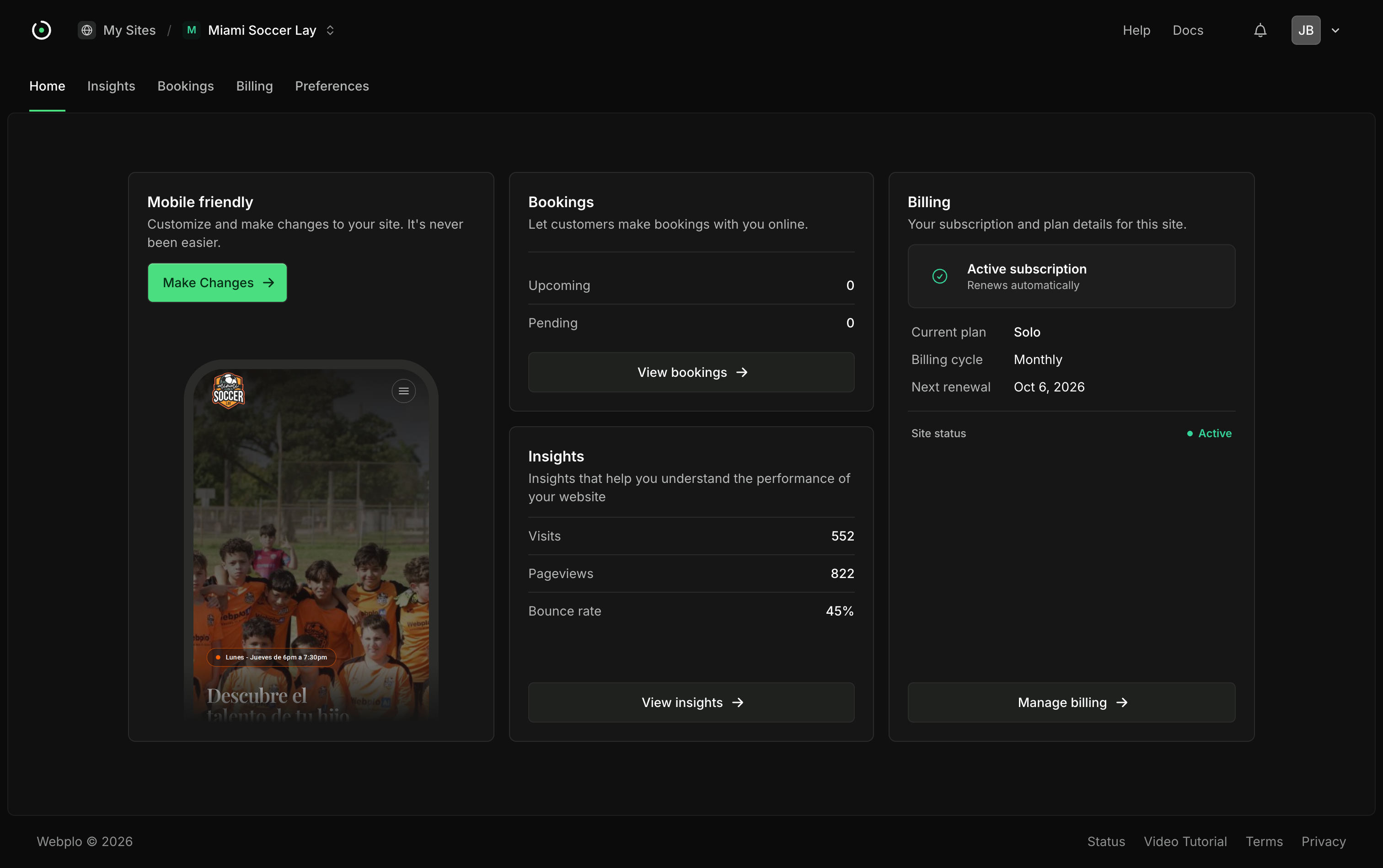
Everything a Webplo customer sees after signing in (the dashboard, site settings, bookings, billing, the account pages) is built with Flux, the component library made by the Livewire team. So is the operations console we use to run the platform.
That is 175 Blade views, 37 different Flux components and, at last count, 361 buttons. This is why we did not build them ourselves, and what the decision has cost.
The question was never "which design system"
Webplo is a Laravel 13 application on Livewire 4. The interface is rendered on the server and made interactive by Livewire and Alpine. Whatever we used for components had to be Blade components, or we would be running a second front-end stack next to the first one.
That left two real options: write our own component set, or use Flux.
Writing our own looks cheap at the start. A button is a few classes. A text input is a few more. The cost arrives later, in the components nobody wants to write twice: a modal that traps focus and hands it back when it closes, a dropdown you can drive from the keyboard, a time picker, a select that works on a phone, a switch a screen reader can announce. Each of those is a small project, and each one is behaviour our customers would notice only when it was broken.
A small business owner changing their opening hours at eleven at night should not be the person who discovers that our home-made time picker does not close when they press Escape.
What using it looks like
This is the notification preference row from the account settings page, trimmed to what matters:
<x-shell.setting
    :label="__('Booking inbox alerts')"
    :help="__('In-app alerts when a customer books or cancels an appointment on your sites.')"
>
    <flux:switch wire:model="bookingNotificationsEnabled" />
</x-shell.setting>
<x-shell.setting> is our own component. It puts the label and help text on the left and whatever control you give it on the right. <flux:switch> is the whole switch: the markup, the states, the keyboard handling, the accessibility attributes, and the binding to the Livewire property through wire:model. No JavaScript is written for it, and nothing about it is specific to this page.
The same pattern holds for a text field, a segmented control or a select. Put a Flux control inside a setting row and the page stays consistent without anyone having to remember a rule.
Modals are where it pays for itself
Changing a site's address is a risky change, so it happens in a modal with two steps. In the first, below, the owner types the new address and sees whether it is available as they type. In the second, the modal shows the old address crossed out next to the new one and says that visitors to the old address will be redirected for 30 days. Nothing changes until they confirm.
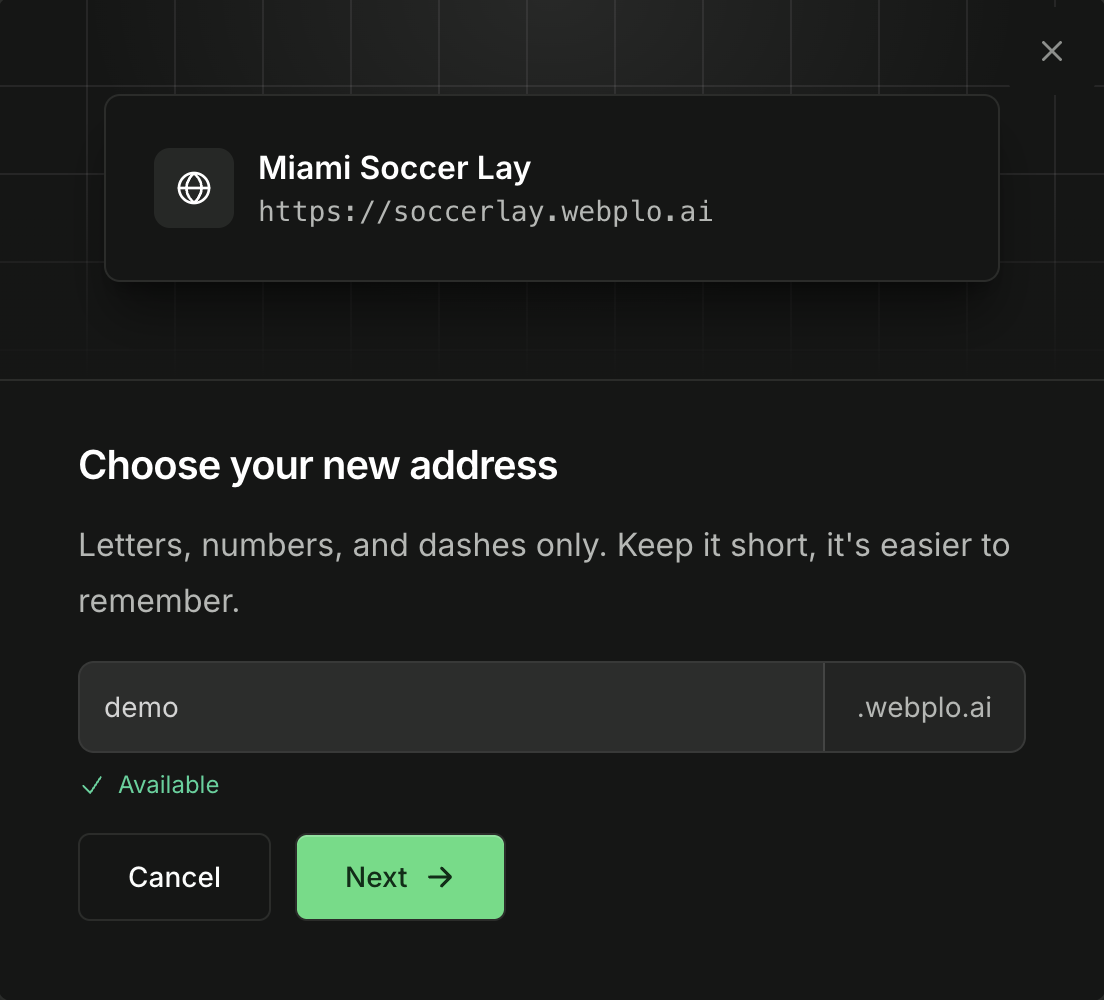
We wrote the content of those two steps. Flux handles everything around it: opening and closing, focus, the Escape key, the close button, the backdrop, and a second step inside the same dialog. We use ten modals across the app and have not had to debug any of that behaviour ourselves.
Five colour themes, one variable
Webplo lets each account pick a colour theme for its dashboard: ink, forest, indigo, amber or rose. Here is the same weekly hours card under two of them.
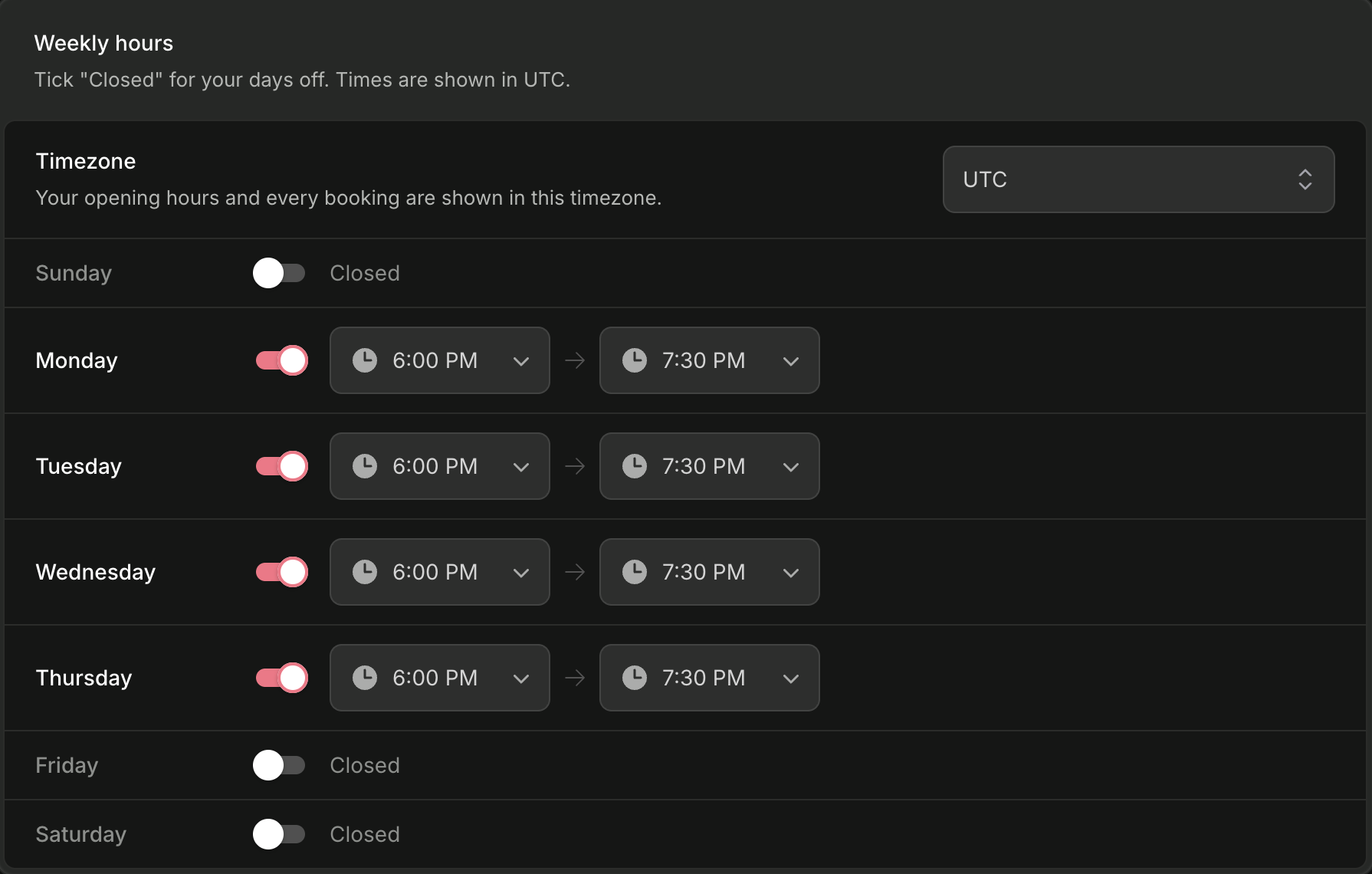
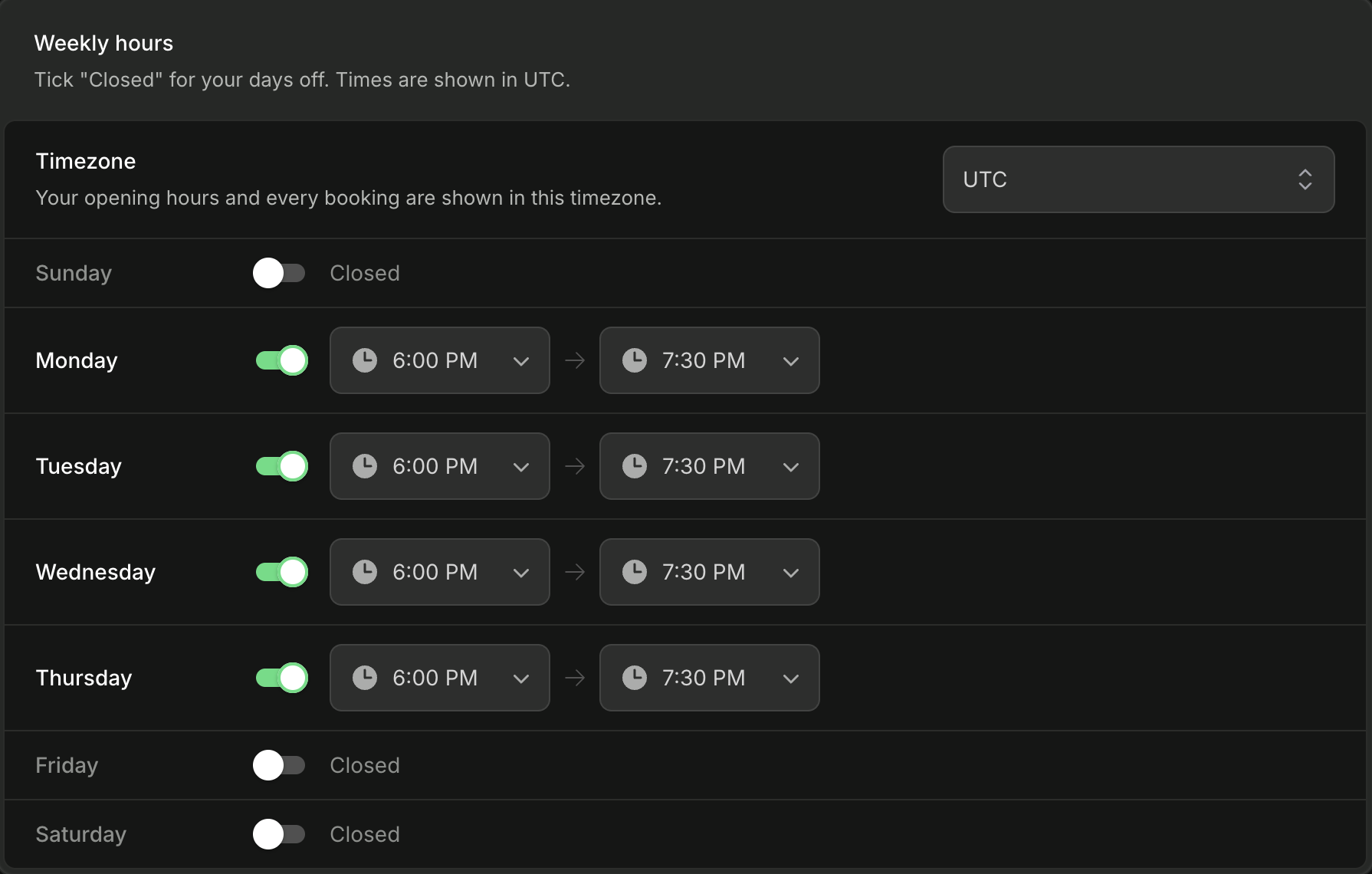
Nothing in that view knows which theme is active. Flux paints its switches, checkboxes, radios, links and primary buttons with one CSS variable, --color-accent. We point that variable at our own token, and each theme only changes the token:
--color-accent:            var(--app-accent);
--color-accent-foreground: var(--app-accent-fg);

[data-app-theme="forest"] {
    --_accent-l: #15803d; --_accent-l-fg: #ffffff; --_accent-l-hover: #166534;
    --_accent-d: #4ade80; --_accent-d-fg: #052e16; --_accent-d-hover: #86efac;
}

[data-app-theme="rose"] {
    --_accent-l: #e11d48; --_accent-l-fg: #ffffff; --_accent-l-hover: #be123c;
    --_accent-d: #fb7185; --_accent-d-fg: #4c0519; --_accent-d-hover: #fda4af;
}
Each theme is a colour pair: Tailwind's 700 shade in light mode and 400 in dark, so text on the accent stays readable in both. Adding a sixth theme is four lines of CSS. The canvas, cards, borders and text never change between themes, which is what keeps every theme looking like the same product.
Theme it, do not fork it
Flux lets you publish any component into your own project and edit it. We have been careful with that. Out of 37 components in use, we have published two (the sidebar navigation list and the toast), plus a set of our own icons that Flux renders alongside its built-in ones. Everything else is styled through tokens.
The reason is upgrades. A component you have published is a component you now maintain. Anything left alone gets its fixes and accessibility improvements with a composer update. When a new Flux release lands, we read the changelog, run the test suite and ship it.
What it costs
It would be dishonest to present this as free.
It is a paid licence. The components we rely on most (the time picker, the richer selects) are in Flux Pro. For a company building one product that is cheap compared with the engineering time it replaces, but it is a line on the budget.
It ties us to Livewire. Flux is Blade and Livewire. If we ever wanted a React front end, the components would not come with us. We are comfortable with that because the whole platform is built on the Laravel stack, but it is a real lock-in.
It has opinions. Flux has its own spacing, sizes and defaults, and occasionally our design wants something different. Most of the time a token is enough. When it is not, we lose a little time working with the library instead of around it.
Edges exist. The carousel component in one release shipped a class that our CSS build could not parse, which produced a warning on every build. We do not use the carousel, so we excluded it from the build and left a note to remove the exclusion if we ever adopt it. Small, but the kind of thing you inherit with any dependency.
Would we choose it again
Yes. The test we apply to a dependency is whether it lets a small team spend its time on the product instead of on infrastructure the customer never sees. For Webplo, that is the booking flow, the site editor and the sixty-second launch. A modal that closes properly is not where we want to be clever.
If you are building on Laravel and Livewire, Flux is the default we would recommend. If you are not on Livewire, it is not for you, and no amount of theming changes that.